What Makes A Sunglasses Advertisement Instantly Persuasive?
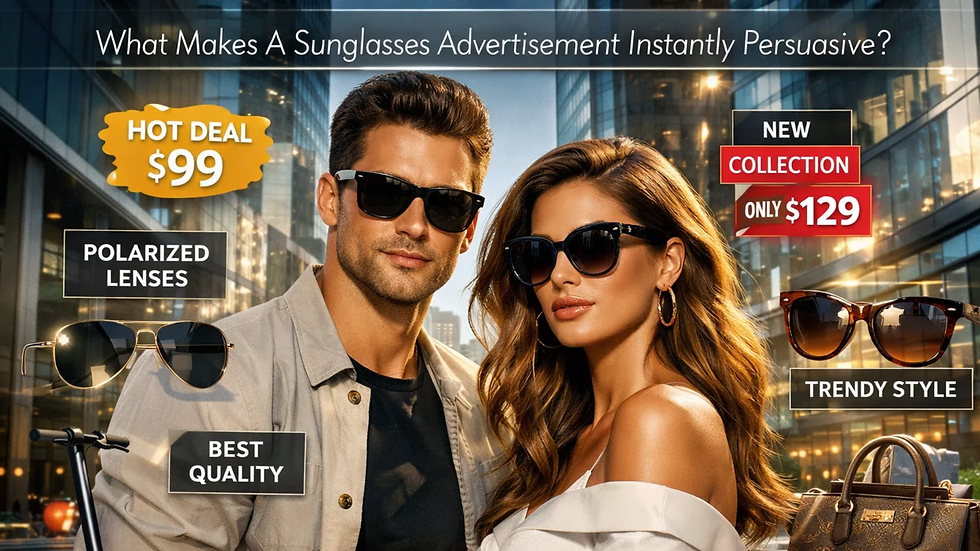
Why do some sunglasses ads instantly catch your eye while others fade away unnoticed? What makes one campaign feel aspirational and another forgettable? The answer lies in how effectively the message connects style, protection, and personal identity in a matter of seconds. People don’t buy sunglasses purely because of lenses or frames; they buy what those sunglasses say about them.
At a fundamental level, successful advertising in this space answers the viewer’s unspoken questions early. Will this protect my eyes? Will it suit my face and lifestyle? Will it make me feel confident wearing it? When these answers are delivered clearly and visually, persuasion happens almost effortlessly. Modern consumers also expect immediacy. They scroll fast, skim faster, and decide quickly. That’s why clarity within the first few moments is critical. An effective sunglasses advertisement communicates value instantly, without overwhelming the viewer with technical jargon or unnecessary flair.
Why Sunglasses Are Easier To Sell Than Most Accessories
Sunglasses occupy a rare position between necessity and desire. Unlike purely decorative accessories, they solve a real problem while enhancing appearance. This dual purpose gives marketers a natural advantage.

From a functional perspective, sunglasses protect against harsh sunlight, glare, and long-term eye damage. From an emotional perspective, they signal taste, confidence, and lifestyle. Advertising that balances these two dimensions feels complete rather than one-sided.
Seasonality also plays a role. Bright weather, travel, and outdoor activities naturally increase demand, making the product contextually relevant for large parts of the year. When advertising aligns with these moments, it feels timely instead of intrusive.
What Strong Sunglasses Campaigns Communicate Immediately
The most effective campaigns do not explain, they show. Within seconds, the viewer should understand who the product is for and why it fits their life.
First, the setting matters. Natural light, open environments, and real-world scenarios make the product believable and clearly communicate its value proposition without explanation. Second, the model or subject should reflect the target audience’s aspirations rather than an unreachable fantasy, helping viewers immediately see how the product fits into their own lives. Finally, the message should focus on one core benefit, whether that is comfort, clarity, durability, or style.
When too many ideas compete for attention, impact is diluted. Simplicity strengthens recall.

The Role Of Visual Storytelling
Sunglasses are worn on the face, which makes them inherently personal. This is why close-up shots, subtle expressions, and confident posture are so powerful in ads. The viewer doesn’t just see the product; they imagine themselves wearing it.
Colour grading, reflections, and shadows subtly influence perception. Warm tones suggest leisure and relaxation, while sharp contrast conveys performance and precision. None of these elements is accidental. They guide emotion without saying a word. Importantly, authenticity matters more than perfection. Overly polished visuals can feel distant, while realistic imagery builds trust.
Measuring Success Beyond Immediate Clicks
Not every successful campaign drives instant sales. Some Advertising Models are designed to build long-term brand memory, which shows up later through repeat purchases or organic searches. Recognition, recall, and emotional association are often better indicators of lasting impact than click-through rates alone.

When viewers remember how an ad made them feel, the brand has already won half the battle. These emotional impressions influence future decisions by building familiarity and trust. Over time, this quiet reinforcement shapes preference, making the brand feel like the obvious choice when purchase intent eventually emerges.
Platforms And Formats That Deliver The Best Results
Digital platforms favour short attention spans, making concise visual storytelling essential. Short videos and single-image ads perform well when they focus on mood rather than explanation.
Search-based placements, on the other hand, work best when they emphasize clarity and relevance. Here, users are already interested; the ad’s job is simply to reassure and differentiate. Offline formats such as billboards or print still play a role, especially for premium brands. These channels emphasize presence and prestige rather than immediate action.
You can also watch: Introducing 'My Projects' | PowerAdSpy’s New Way to Create Competitors List
Conclusion: Why Sunglasses Advertising Continues To Work
Sunglasses advertisement remains one of the most effective forms of visual marketing because it blends function, fashion, and emotion into a single experience. When done well, it doesn’t feel like a sales pitch; it feels like an invitation to step into a brighter, more confident version of everyday life. It captures attention quickly, communicates value without lengthy explanation, and stays memorable long after the viewer scrolls past. By aligning visual storytelling with real-world moments, strong campaigns simultaneously build trust and desire. This balance enables brands to shape perception, solidify their identity, and foster long-term loyalty, rather than relying solely on short-term conversions.
FAQs
What is the main purpose of sunglasses advertising?
To communicate eye protection while associating the product with confidence, style, and lifestyle.
Do consumers care more about fashion or function?
Most buyers expect both. Ads that combine protection with visual appeal perform best.
Are minimal ads more effective than detailed ones?
Yes. Clear, focused messages tend to outperform complex explanations.

